


Mental Health Services
Our comprehensive, person-centered approach includes individual and family therapy, group treatment, EMDR for trauma, recovery support, case management, crisis intervention, and employment services through our nationally-recognized IPS program. With services available in Paris and Marshall, plus school-based therapy in multiple districts, we meet people where they are.
HRC believes that recovery from mental illness and serious emotional disturbance is possible. We believe that Recovery is the expectation in services. We understand lapse and relapse to be a common part of the recovery experience that can be utilized to clarify and refine the needs of the person served. Relapse can also assist the person served to refocus on necessary participation in a wide array of services. Recovery is a process, not a destination.


Mental Health Services We Provide
Mental Health and Recovery Groups
EMDR
Assessment and Treatment Planning
Individual and Family Therapy
Recovery Support and Case Management
Crisis Intervention
IPS Employment Services

HRC has both therapist-run therapy groups and recovery groups. Therapist-led groups involve a group of people who, with the guidance of a therapist, work on problems together. Recovery groups are facilitated by Certified Recovery Support Specialists. Groups can help people get well and stay well. HRC provides a variety of group treatments including Whole Health Action Management (WHAM) and Wellness Recovery Action Plan.
These services are available by contacting (217) 465-4118 and requesting mental health services. If, following an assessment, the person and their therapist identify groups as a benefit to recovery, they may be enrolled in one of HRC’s Groups.

These services are available by contacting (217) 465-4118 and requesting mental health services and specifying that you are seeking EMDR services. If, following an assessment, the person and their therapist identify EMDR as a benefit to recovery, the person may be enrolled in one of HRC’s Groups.
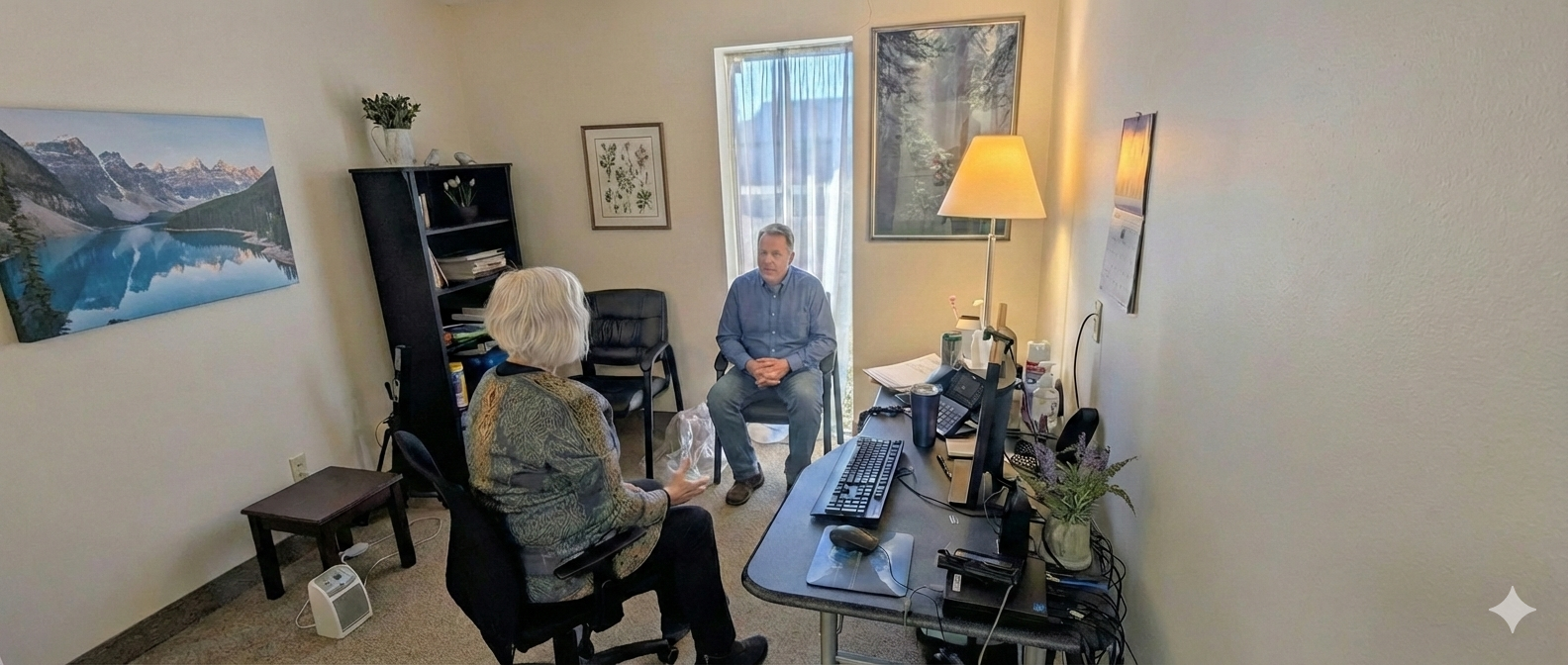
These services are available by contacting (217) 465-4118 and requesting mental health services. In most circumstances this call will lead to an intake appointment, an assessment, and then the development of a treatment plan. Treatment plans are updated routinely throughout treatment.

- Individual counseling (called psychotherapy, talk therapy, or treatment) is a process in which clients work one-on-one with a trained mental health clinician in a safe, caring, and confidential environment. Counseling allows individuals to explore their feelings, beliefs, and behaviors, work through challenging or influential traumas or memories, identify their personal goals, better understand themselves and others, and work toward desired goals.
- Family therapy is a type of treatment designed to help with issues that specifically affect families' mental health and functioning. It can help individual family members build stronger relationships, improve communication, and manage conflicts within the family system. By improving how family members interact and relate to each other, family therapy can encourage change in close relationships.
These services are accredited by CARF and available to youth and adults by contacting (217) 465-4118 and requesting counseling or family therapy. In most circumstances, this call will lead to an intake appointment, an assessment, and the development of a treatment plan. Treatment plans are updated routinely throughout treatment.

The Recovery Support Specialist's (RSS) role is to support others in recovery from mental health struggles, trauma, and those seeking resources in the community. The RSS serves as a role model, mentor, and advocate, and seeks to empower recovering individuals in order to help prevent relapse, provide ongoing support, and promote long-term recovery.
A Recovery Support Specialist is a person successful in their own recovery process who helps others experiencing similar situations. Through shared understanding, respect, and mutual empowerment, a RSS helps people become and stay engaged in the recovery process. A RSS strives to extend mental health treatment, trauma recovery, and support beyond the clinical setting into the everyday environment and communities of those seeking recovery.
These services are available to individuals who participate in HRC’s mental health treatment programs who have a need for these services. In order to access these services, people need to enroll in substance use disorder treatment and demonstrate need for this service.
What can a RSS Assist With?
- Advocate for people in recovery
- Share resources and skill building
- Build community and relationships
- Mentor and help to set goals
- Support people in building wellness and coping skills
- Assist in developing skills such as grocery shopping, budgeting, relationship building, and problem resolution
- Coach individuals through their recovery by helping them identify stressors and discover coping techniques
- Coordinate with other providers so the people we serve receive appropriate care for related physical health needs
- Assist in applying for, obtaining, and using resources such as public entitlements (SNAP, Medicaid), childcare, employment, the compassionate clothing closet, food pantry, public transportation, and higher education
These services are available by contacting (217) 465-4118 and requesting mental health services. If, following an assessment, the person and their therapist identify this service as a benefit to the individual and the individual chooses, the service may be offered.

HRC has the capacity to respond to mental health crisis needs at the local jails, doctor's offices, and the emergency room. This program provides for telephonic and telehealth access to behavioral health crisis care services. This service includes crisis assessment and crisis interventions for individuals regardless of insurance coverage. HRC provides equal access to services and supports to any adult individual experiencing a health crisis of a behavioral health (BH) nature that poses a risk for movement to a higher level of care, such as inpatient psychiatric or nursing home settings. The most common conditions that people seek these services for are ideation to self-harm, harm others, or delusional behavior that places an individual in risk of becoming seriously harmed.
If you need help right now, call or text 988. The 988 Suicide and Crisis Lifeline is free, confidential, and available 24 hours a day, every day, for youth and adults. HRC’s crisis services include crisis assessment and crisis intervention for adults 18 and older, regardless of insurance coverage, and are available to any adult experiencing a behavioral health crisis that poses a risk of movement to a higher level of care, such as inpatient psychiatric or nursing home settings.
Emergency Crisis Assessment services are available for youth & adults by calling 988.

HRC’s Individual Placement and Support (IPS) services are an evidence-based practice that was developed to help promote the recovery of people who have serious mental illness through employment. This model is an evidenced-based program with proven success.
For several years now, HRC has held a top spot in the nation for program fidelity based on audits by the Department of Rehabilitation Services and IL Department of Mental Health as demonstrated by having the top score in the nation.
IPS can help to address the following goals:
- Assist persons with serious mental illness in choosing, obtaining, and maintaining competitive employment in the community.
- Reduce or alleviate symptoms of mental illness through competitive employment.
- Assist persons to identify work strengths, needs and preferences.
- Provide support and assistance through the job search assistance.
- Provide ongoing supports to employed persons to assist them in maintaining employment.
To participate in IPS the person must meet these criteria:
- Participants must be identified as having a mental illness;
- Must be 18 years of age;
- Must reside in Edgar or Clark County, IL;
- Must have documentation of mental illness that impacts the person’s ability to achieve and/or maintain competitive employment;
- Participant must meet at least some of the following criteria:
— Question the benefits of employment in treating mental illness;
— Interested in work but are experiencing doubts about their ability to work or the impact of work on their public entitlements;
— Work history has been interrupted or inconsistent due to mental illness but would like to return to work;
— Interested in or actively seeking employment but have been unsuccessful;
— Employed but have expressed the need or desire for ongoing supports to maintain employment or seek different employment;
— Employed but would benefit from follow-along supports to maintain employment;
— Has the need for integrated vocational and mental health services over an extended period of time;
— Has a history of working in a non-competitive situation, little to no competitive employment history, or inconsistent/interrupted employment history due to mental illness;
— Receiving mental health services or be in the process of obtaining mental health services.
These services are available by contacting (217) 465-4118 and requesting mental health services. If, following an assessment, the person and their therapist identify this service as a benefit to the individual and the individual chooses, the service may be offered.
Meet Our Team

Alyssa Labry

Michelle Creech

Jenny McMahan

Jenna Crockett
.webp)
Casey Craig

Johanna Westin

Marilyn Talbott

Penny Ogle

Grace Poynter
Testimonials
What Is the Cost of the Services?
Have Questions?
